Donal McKeon
Sequence + Aleph: Modern Finance Stack for Billing and FP&A
As finance teams scale, the gap between operational execution and strategic planning creates friction. Billing data lives in one system. Planning and forecasting live in another. Someone on the finance team ends up manually bridging the two. Sequence is partnering with Aleph to help close that gap.
What Sequence and Aleph do together
Sequence is the AI-native revenue layer for modern B2B teams. We handle the billing complexity that legacy systems can't: usage-based pricing, multi-year ramps, mid-cycle contract changes, percentage-based pricing with caps. We've built a structured data model underneath that makes revenue data immediately useful for platforms like Aleph - contracts, pricing components, amendments, revenue schedules, all normalized and accessible.
Aleph is building the AI-native FP&A platform finance teams have wanted for years. They connect your ERP, CRM, HRIS and billing data into a single source of truth, then automate the reporting and variance analysis that used to eat up entire weeks.
Structured billing data feeding into AI-powered planning. Revenue operations and FP&A working together, not in silos.
Why this matters
Finance teams at fast-growing companies shouldn't spend time reconciling billing data into their planning tools. When your quote-to-cash platform and FP&A system work together, you get a single source of truth for revenue that flows into forecasts, variance analysis, and board reporting.
- A single source of truth for revenue that flows directly into forecasts
- Automated variance analysis without manual data exports
- Board-ready reporting with billing data you can trust
- Faster month-end close without the spreadsheet reconciliation
This is what the modern finance stack looks like: best-in-class tools that talk to each other, giving finance leaders the visibility and control they need without the manual workarounds.
If you want to see how Sequence fits into your finance stack, book a demo.
Donal McKeon
Related articles
What changed in SaaS and AI pricing in the past 12 months
Last year, the most common prediction in Kyle Poyar's monetization survey was that companies would move to outcome-based pricing. A year on, adoption is flat. We sat down with Kyle again in New York, a year after we published ‘The new rules of B2B pricing’ to see what has changed in a private pricing bootcamp.
Donal McKeon
How the Rules of SaaS Pricing Are Being Rewritten, with Northlane
Pricing strategy is one of those topics where everyone has an opinion and very few people have done the hard work of going from theory to execution. We spoke with Saagar at Northlane, a pricing strategy firm working with VC-backed scale-ups like n8n, PeecAI, DeepL, about what AI has genuinely changed in the pricing world and where the hard implementation challenges actually sit.
Riya Grover
Building Investor-Grade Finance from Day One: Stratix Advisory
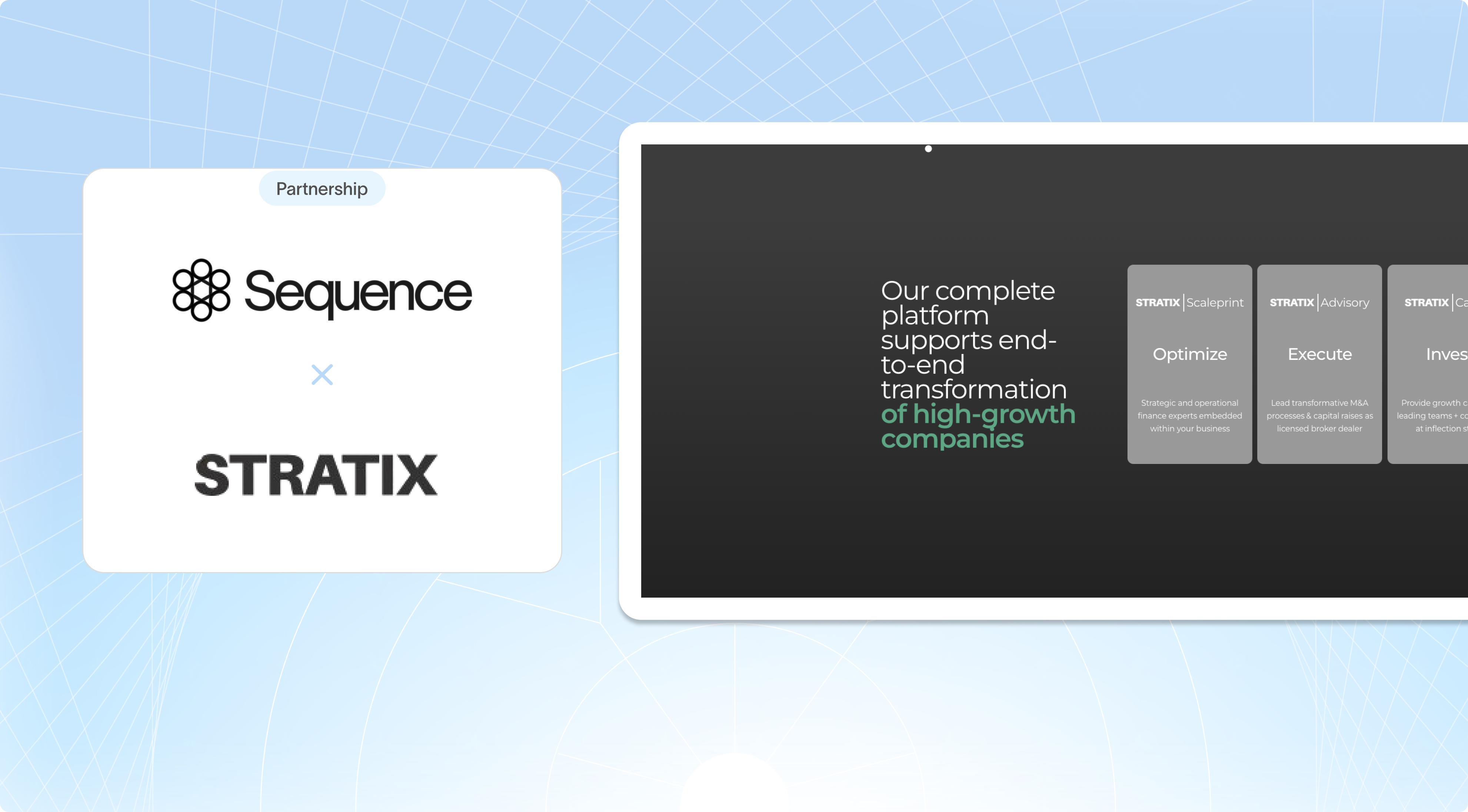
Brian Coburn and Syed Ahsan spent years running diligence on hundreds of deals. Now at Stratix Advisory, they build finance functions for venture-backed companies from an investor's perspective—anticipating diligence questions before they're asked and using tools like Sequence to automate revenue recognition.
Donal McKeon