Sequence
Press Release: Intuit to Acquire AI-Native Revenue Management Platform Sequence
Acquisition strengthens Intuit Enterprise Suite and QuickBooks Online Advanced, expanding Intuit’s revenue management offerings for mid-market businesses

MOUNTAIN VIEW, Calif. and LONDON, Oct. 15, 2026 – Intuit Inc. (Nasdaq: INTU) today announced it has signed an agreement to acquire Sequence, a Series A revenue management company that automates the end-to-end quote-to-revenue process for businesses. The acquisition will extend Intuit's financial system of intelligence with new revenue management capabilities and strengthen its mid-market offerings, including Intuit Enterprise Suite and QuickBooks Online Advanced.
Sequence replaces spreadsheets and manual billing workflows with an AI-native revenue management platform. With Sequence, Intuit will give mid-market businesses and the accounting firms who advise them a single platform to price, bill, and collect on revenue tied to consumption, usage, seats, and milestones. Sequence will allow Intuit to serve new industries, including B2B software and professional services, giving businesses a modern alternative to legacy ERPs that still require manual work to manage revenue.
"As businesses grow, pricing, billing, and collecting on complex usage-based and milestone-based revenue becomes one of the biggest reasons they choose an ERP," said Ashley Still, Executive Vice President and General Manager, Small Business & Mid-Market Group at Intuit. "Sequence will let us deliver mature revenue management to customers, further extending Intuit Enterprise Suite directly into industries that increasingly leverage AI consumption models like B2B software and professional services. It's a meaningful step forward as we deliver a powerful, AI-native ERP for growing, complex businesses."
"Revenue management has long been the most fragmented workflow in the back office. As businesses adopt usage-based and hybrid pricing, that complexity is only growing," said Riya Grover, Co-Founder and CEO of Sequence. "We built Sequence to automate the entire process, from contract to revenue recognition, with AI agents automating daily tasks and working securely alongside finance teams. With Intuit's platform and reach, and our shared alignment on serving mid-market businesses and creating AI-driven financial workflows, this is a natural fit for both companies."
Sequence handles revenue automation for some of the fastest-growing AI companies in the world today. As part of the acquisition, Intuit will welcome the Sequence team, including Grover, who will join Intuit's Mid-Market product organization. With this acquisition, Intuit gains a complete revenue management platform and AI-native engineering talent to help it deliver a powerful, AI-native ERP for growing, complex businesses.
Intuit will continue to support Sequence customers and make its capabilities available after the acquisition closes. Intuit will also develop an integrated offering in the coming months. Intuit closed the acquisition of Sequence on October 15, 2026. Financial terms of the deal were not disclosed.
FT Partners is serving as exclusive financial and strategic advisor to Sequence.
About Intuit
Intuit is the global financial technology platform that powers prosperity for the consumers, businesses, and accountants we serve, with products including TurboTax, Credit Karma, QuickBooks, Mailchimp, Intuit Enterprise Suite and Intuit Accountant Suite. Intuit's financial intelligence brings together decades of trusted data, deep financial expertise, AI, and human experts to help customers at every stage of their financial journey. This puts more money in their pockets, saves time by reducing manual work, and ensures they have complete confidence in every financial decision. For more information, visit Intuit.com.
About Sequence
Sequence is an AI-native revenue management platform that helps B2B finance and commercial teams automate the full quote-to-revenue lifecycle, including deal configuration and pricing, billing, invoicing, collections, and revenue recognition. Founded in 2021 and based in London and New York, Sequence serves finance teams at high-growth software and services companies.
Disclaimers
This information is intended to outline our general product direction, but represents no obligation and should not be relied on in making a purchasing decision. Additional terms, conditions and fees may apply with certain features and functionality. Eligibility criteria may apply. Product offers, features, and functionality are subject to change without notice.
Sequence
Related articles
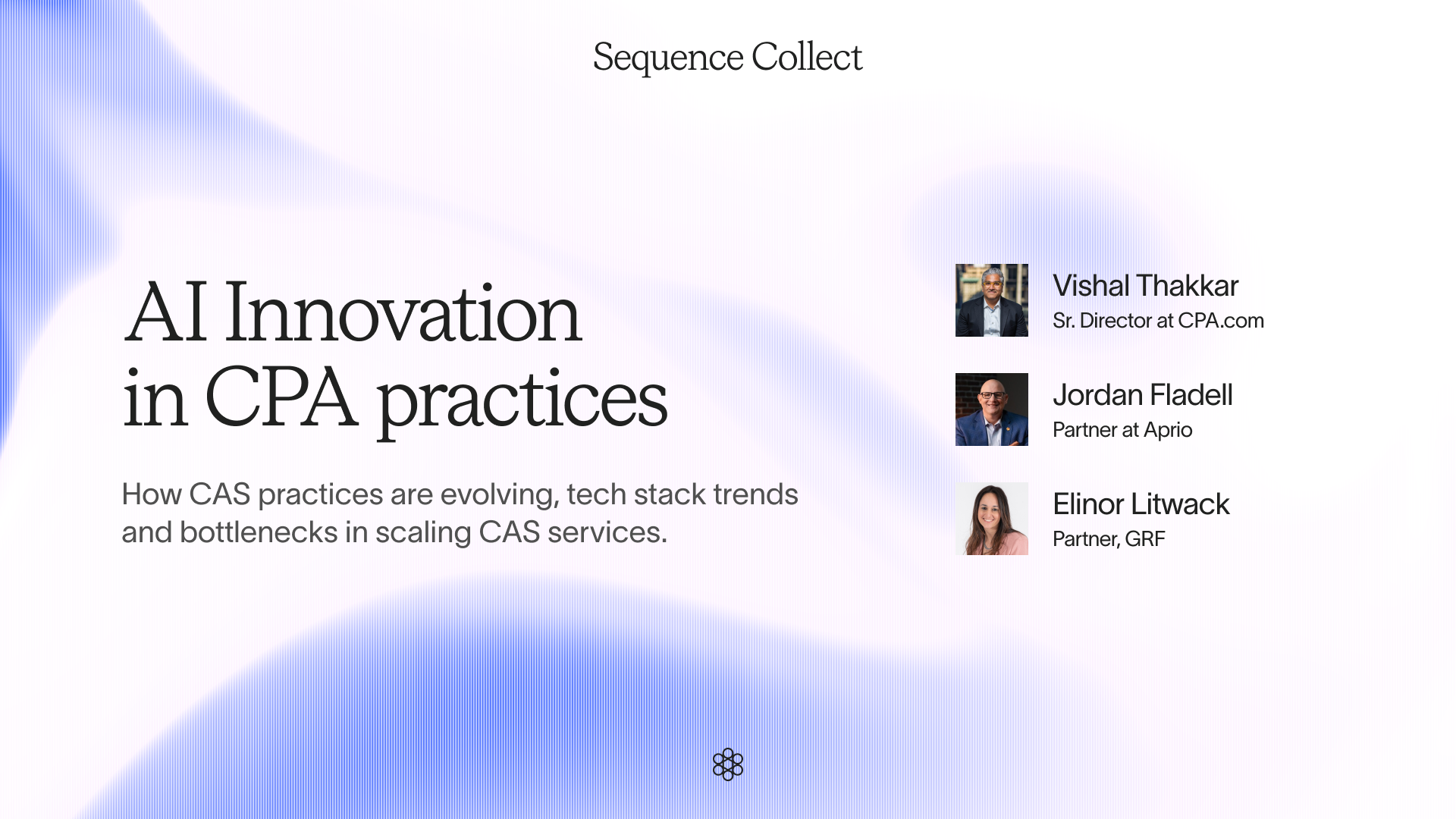
Sequence Collect 2026: AI Innovation in CPA Practices
Vishal Thakkar is Senior Director of Alliances at CPA.com, Jordan Fladell leads technology advisory at Aprio after years on the other side of the table as a client, and Elinor Litwack spent 19 years making partner at GRF and now leads the firm's AI strategy. On September 9th, at Sequence's Collect 2026, they compared notes on what AI is really doing inside accounting firms, from why data is the thing gating automation to how firms evaluate vendors now, and which generation in the firm is using the tools on a day to day basis.
Riya Grover
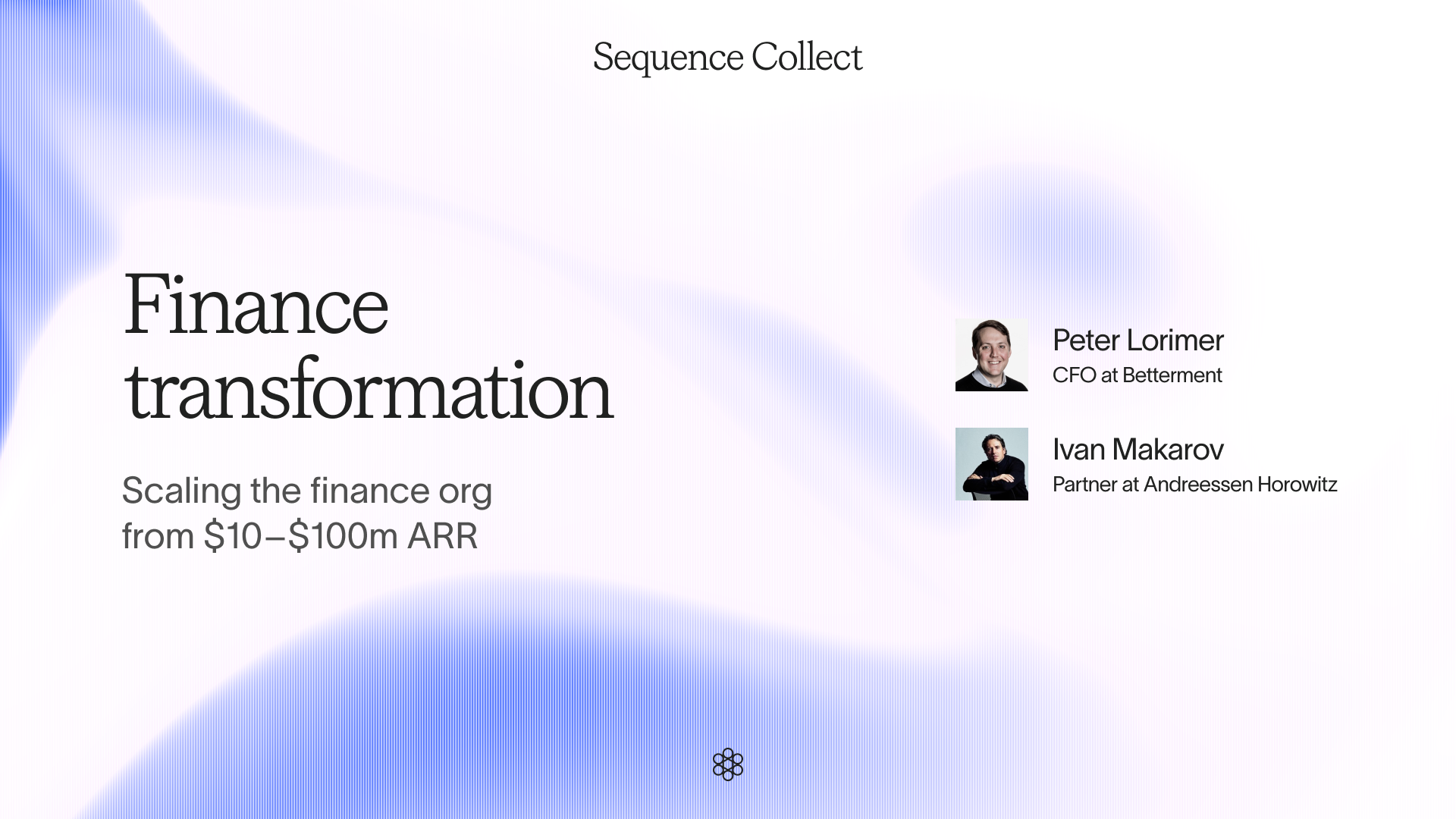
Sequence Collect 2026: Scaling the Finance Org from $10 to $100m ARR
Peter Lorimer has spent 10 years building the finance function at Betterment and Ivan Makarov now advises finance teams across the a16z portfolio after doing the same at Webflow. On September 9th, at Sequence’s Collect 2026, they shared how the finance function changes as companies scale, from who you hire and how you plan to where you build vs. buy, and what AI is transforming across all three.
Riya Grover
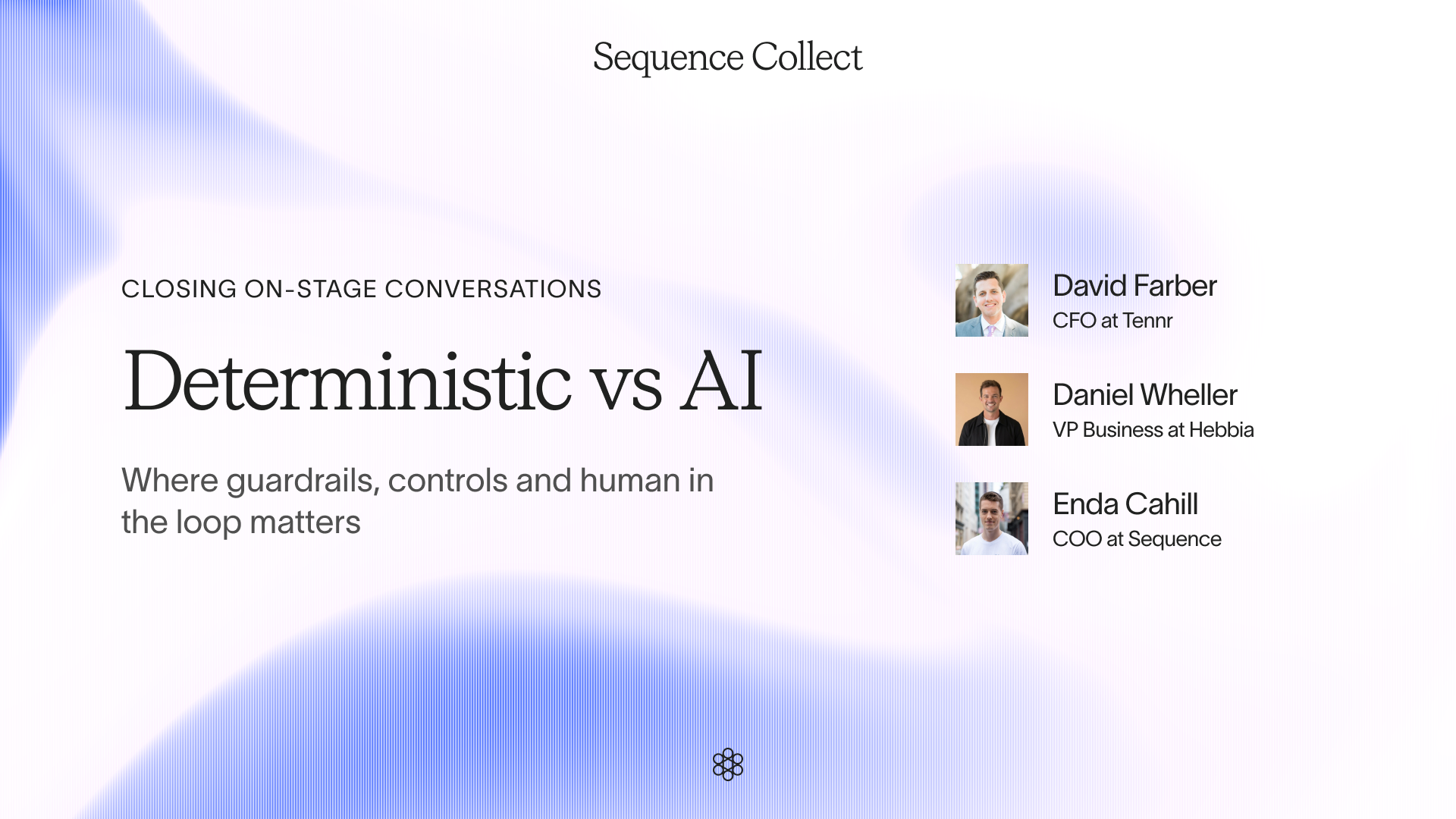
Sequence Collect 2026: Deterministic vs AI
David Farber is CFO at Tennr, running a four-person finance team he reckons could carry three times its current volume, and Daniel Wheller spent seven years at Palantir before building out Hebbia's forward deployed and post-sales functions. On September 9th, at Sequence's Collect 2026, they sat down with Enda Cahill to draw the line between the work that has to stay deterministic and the work agents should be doing, from pricing when inference is your biggest cost driver to whether a task can be evaluated at all.
Enda Cahill